
Life in Gaza
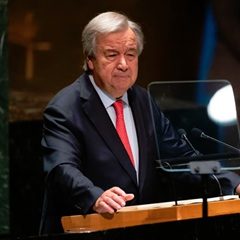
Following the attacks on Israel in October 2023, United Nations Secretary General, António Guterres, said that the attacks "did not happen in a vacuum". He was immediately attacked by Israeli leaders who accused him of antisemitism and called for his immediate resignation. What might he have meant by his comments?
The isolation of the Gaza strip
The isolation of the Gaza strip did not begin with Hamas seizing control in 2007. In August 2009 a report was published by the United Nations Office for the Coordination of Humanitarian Affairs. By that stage the blockade of Gaza had been in place for two years. But, in an end note to the report it is observed that: "The blockade marked the peak of a gradual process of isolation of the Gaza Strip that started in the early 1990s with the imposition of a general closure which forced Gazans to obtain special permits to travel to the West Bank; in 1995, Israel built a perimeter fence encircling the Gaza Strip and separating it from Israel; for most of the time since the beginning of the second Intifada in September 2000, permits to enter or leave Gaza were limited mainly to 'humanitarian cases'".
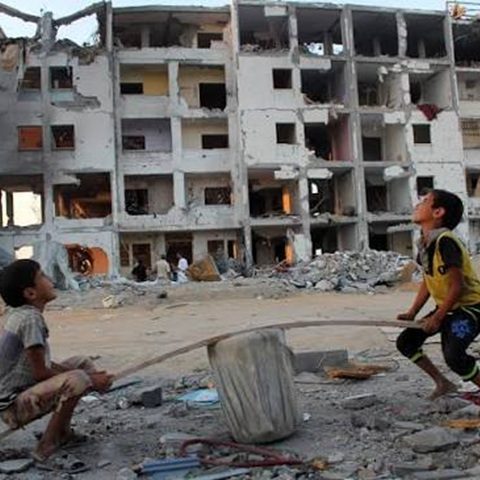
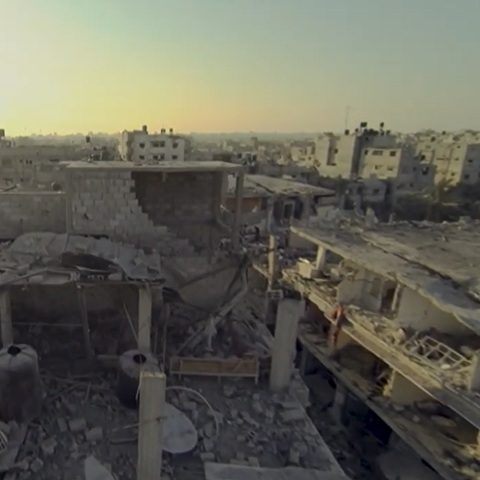
The report detailed how the blockade had locked in 1.5 million people in what is one of the most densely populated areas on earth, triggering a protracted human dignity crisis with negative humanitarian consequences. The report concluded that: "This blockade is collectively punishing the entire Gazan population. The UN, the ICRC, many states and
humanitarian organizations, have repeatedly urged the Government of Israel to remove the restrictions on
Gaza’s borders as well as to allow free access to agricultural areas within Gaza and to fishing areas in Gaza’s
territorial waters. These are the urgent first steps needed to start the reconstruction of homes and infrastructure,
the revival of the economy, and the restoration of human dignity in Gaza."
Amnesty International produced a report on what was unfolding in Gaza in July 2008. It concluded that: "A humanitarian crisis is engulfing Gaza – not the result of a natural disaster but entirely man-made and avoidable. The tightening of Israeli blockade since June 2007 has left the population, 1.5 million Palestinians, trapped and with few resources. Some 80 per cent depend on the trickle of international aid that the Israeli government allows in. Even patients in dire need of medical treatment not available in Gaza are often prevented from leaving." The report highlights several examples of individuals and collective groups that have fallen victim to such situations.
A report released by the United Nations in 2017, a decade after the imposition of the blockade, found that real gross domestic product (GDP) per capita had decreased and the provision of health services continued to decline in Gaza, "where average Palestinians are trapped in a 'sad reality' and their daily lives are 'getting more and more wretched' . The report called on Israel, the Palestinian Authority, Hamas and the international community to take action to improve the lives of the people in Gaza. "The alternative will be a Gaza that is more isolated and more desperate.” All the signs were there and the report concluded that without change being made: “The threat of a renewed, more devastating escalation will increase, and the prospects for intra-Palestinian reconciliation will dwindle – and with them, the prospects for peace between Israel and Palestine.”
In 2022, fifteen years after the imposition of the blockade, comprehensive reviews were published by the UNOCHA and UNICEF which highlighted that 80 per cent of Gaza's population had become entirely dependent on humanitarian assistance. The reports detailed how the severe economic isolation drove unemployment rates up to roughly 49 per cent, making it one of the highest in the world. UNRWA reporting focused heavily on the unravelling social fabric and infrastructure decay. Their assessments showed that by 2022, 81 per cent of the water extracted from Gaza's aquifers failed to meet World Health Organisation (WHO) safety standards due to a lack of fuel and restricted equipment imports needed to repair sanitation facilities.