
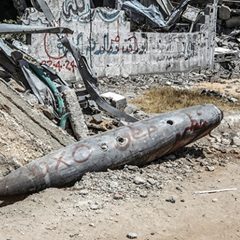
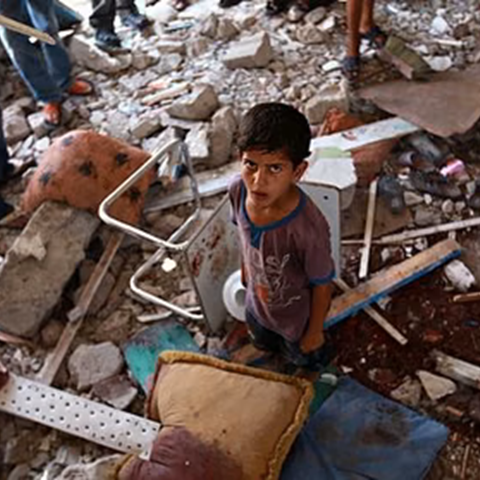
It's difficult to imagine what it must be like to live in a confined space, in squalid conditions, facing regular bombardments from an outside force that was responsible for evicting many of your neighbours and, perhaps your own ancestors, from their homes three generations ago. But, in 2014, an Argentinian documentary maker, Hernán Zin, gave us some idea in the documentary film "Born in Gaza". The documentary looks at how years of the blockade and repeated attacks from Israel have impacted the lives of ten children. A detailed account is given of the documentary here as it seems that, in the UK at least, it is no longer possible to see this documentary. It is no longer available on Netflix and it's not possible to purchase it from Amazon.
Living in Gaza
Born in Gaza
This was a documentary film made in 2014 - nine years before the 7 October attacks. When you create an open prison of 2 million people, subject them to regular missile attacks, destroy what little arable land they have to farm, deprive people of hope in the future - it is unlikely that this will have positive effects. This documentary film should be compulsory viewing for people in the West so as to give some understanding of what the failure to give justice to the Palestinian people will have on the region and the entire world.
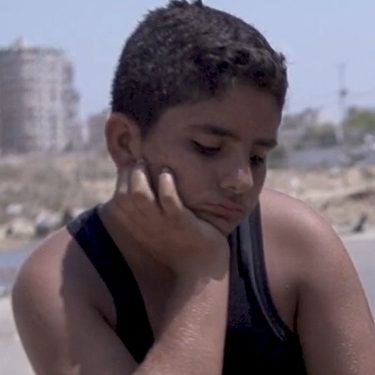
Mohamed
Mohamed collects plastics and debris from dumps to try and earn money for his family. It is dangerous work. There is always the danger of coming across explosives in the dumps after the number of attacks the region has faced.
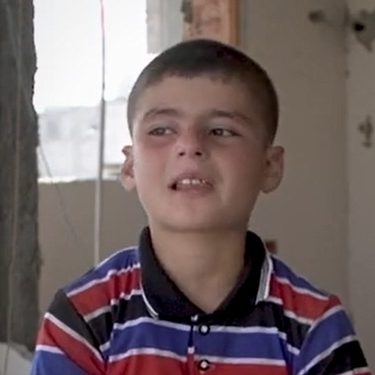
Udai
Udai explains how his father had a soft drinks factory that was destroyed by bombing. He had an older brother, aged 22, who was killed in a bombing whilst delivering beverages. He says that he has lots of bad dreams and can't sleep.
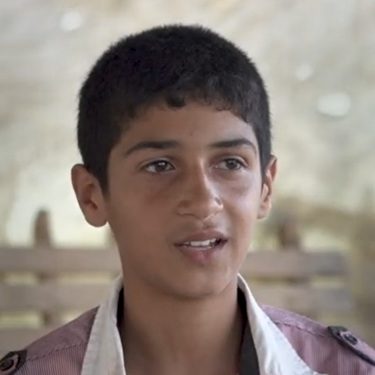
Mahmud
Mahmud explains that his father grows cucumber, tomatoes, pepper and spinach. He says that their farm has 25 acres and the diggers have destroyed our farm 11 times between 2011 and 2014. They destroy everything that they find.
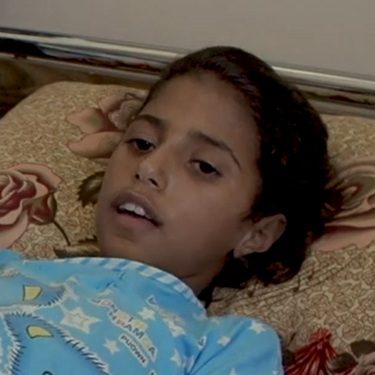
Sondos
Sondos recalls how missiles had started to fall, in spite of the fact that there was a ceasefire. They decided to run away from home but when they were by the Omar Ibn Al - A'as mosque, a missile fell. Sondos was hit by shrapnel.
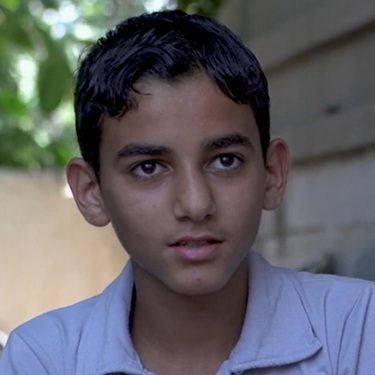
Rajaf
In Gaza City, Rajaf remembers his Dad who was an ambulance driver who was killed trying to save others. Seven members of a family had been picked up and the missile hit was so bad that the pieces of bodies got mixed up.
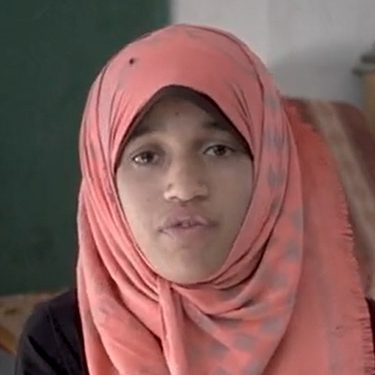
Malak
Malak was at school when the missile struck. The first missile hit the restrooms. There was a second and then a third missile. It was the third which killed her brother and cousin. They thought they were safe as it was a UN school.
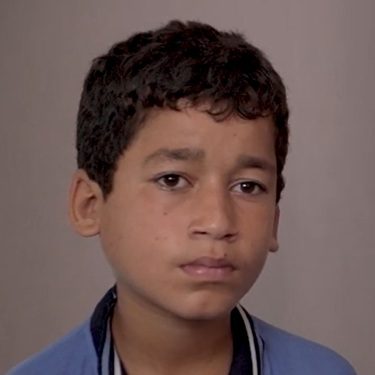
Hamada
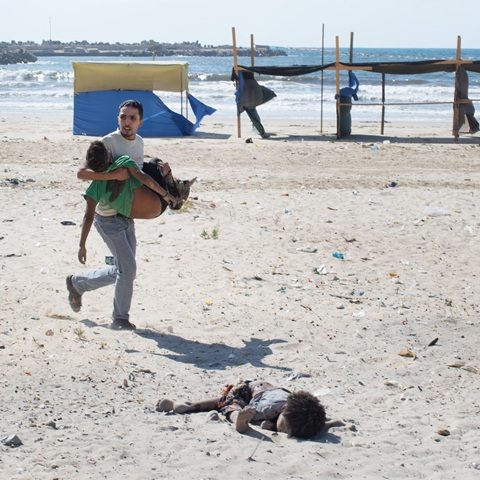
Hamada was one of eight boys playing football on the beach when they were hit by an Israeli missile attack. Four of his friends were killed whilst he and his friend Montasem were injured as a result of the attack. Hamada spent 7 days in hospital.
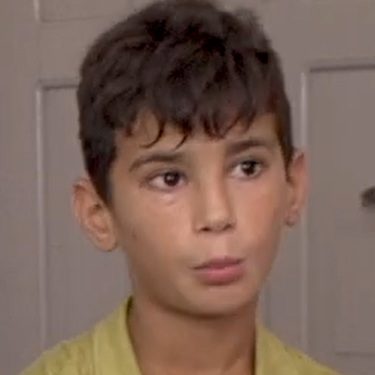
Montasem
Montasem says they were eight boys playing soccer at the beach. A missile hit and he told his friends to leave him and run. They ran off and were hit by another missile. He kept running with Hamada although he was covered in blood.
Bisan describes how she was sitting at home with Shaima and Mohammad when the Israelis bombed their house. A nurse came to take her and she was eventually taken to the Al Shifa hospital. She is left with injuries that require treatment abroad.
Bisan
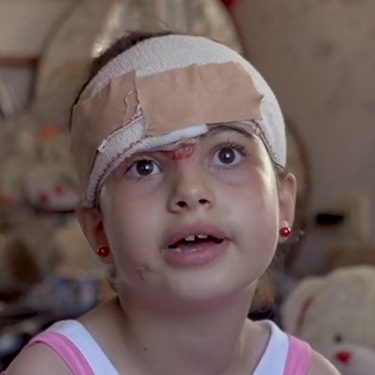
Haia
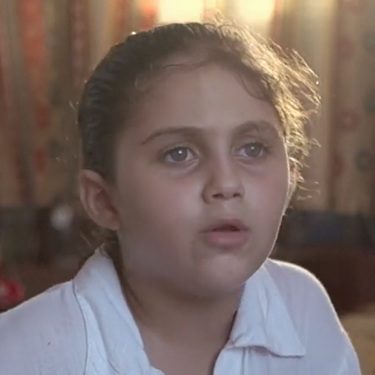
Bisan is Haia's aunt, although they are both six years old. She says her aunt was playing at home when they were bombed. Bisan lost her parents in the attack. They now play together like sisters but Bisan doesn't like to talk about what happened.
Questions that the children ask
Mahmud says "we are pacific farmers". He can't understand why somebody wants to just come and destroy everything. "We grow vegetables. We do not grow bombs, so they don't have any reason to come bomb us." One story. One unanswerable question. But when you look at the number of farms that have been destroyed in Gaza over the past two decades the reality begins to look rather different and begins to provide its own answers. Israel has, for a protracted period of time, been engaged in a policy of laying waste to what little means of providing food is available in Gaza. It seems to have been pursuing an objective of making Gaza uninhabitable for the people who live there.
Sondos, wounded by shrapnel and lying in hospital, believes she has been lucky because she knows that many children are worse off than her and many children have been killed. She says: "I am a child. They should not do this to us. I do not have any missiles and I do not drive a tank or anything like that. I am not a militia woman. Why are they doing this to us?" Spokespersons for Israel will say that this is the fault of Hamas for hiding among civilians. It's Israel that drops the bombs and does the killing. Not just one incident but thousands of such incidents in what looks like a sustained attempt to drive Palestinians out of the Gaza strip altogether.
Rajaf wonders why his father, who spent his life trying to care for others, was killed. "I cannot find a reason why he was attacked. Are you asking me why they bombed an ambulance? Have you ever heard of any war where ambulances are attacked?" Rajaf's father was killed after going to rescue others hit in a missile attack. He was killed in a missile strike which hit the same place immediately afterwards. Over the past twenty years there have been repeated incidents like these. They are known as double or triple strikes. In the first strike you kill a small number of people. But then first responders arrive on the scene to help the wounded so that the second strike will kill even more people. This is a deliberate policy on the part of Israel.