
Understanding antisemitism
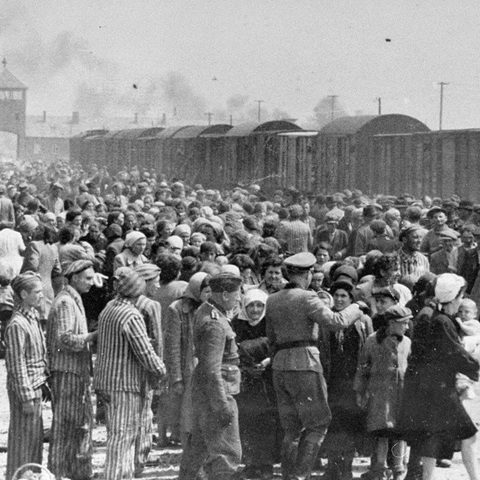
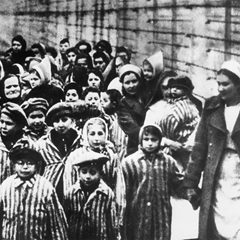
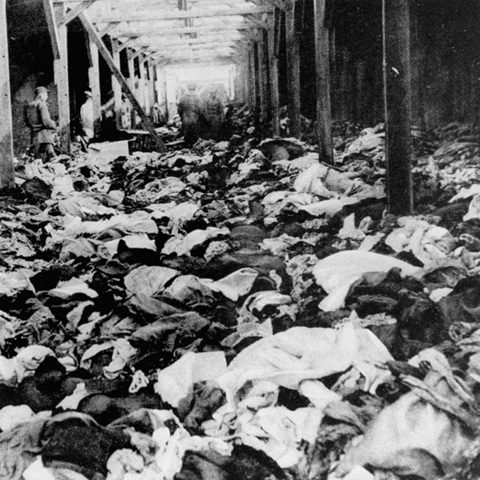
Most people have an understanding of what is meant by antisemitism. It is discrimination against Jewish people. This reached its ultimate horror during the holocaust in which millions of people were murdered by Nazi Germany simply because of their ethnicity. This is what antisemitism can lead to and everybody should do their utmost to combat antisemitism.
Dictionary definition of the term
The Oxford English Dictionary defines antisemitism as hatred of, hostility toward, or unfair treatment of Jewish people. I am strongly opposed to any hatred of, hostility toward or unfair treatment of any group of people based on their ethnicity. But over the past few years this has become a fiercely contested term. There have been attempts to create a broader definition of the term with some definitions of the term seeming to define any criticism of the state of Israel as being antisemitic.
The International Holocaust Remembrance Alliance (IHRA) is an intergovernmental organisation that was established in 1998. As its name would suggest, it's objective is to ensure that the holocaust is never forgotten and it does this through education and research. But it has also offered a "working definition" of antisemitism which has been accepted by many governments and by many important institutions in many different countries. In 2016 it adopted the following definition:
“Antisemitism is a certain perception of Jews, which may be expressed as hatred
toward Jews. Rhetorical and physical manifestations of antisemitism are directed toward
Jewish or non-Jewish individuals and/or their property, toward Jewish community institutions
and religious facilities.”
To try and illustrate what this might mean in practice it goes on to give a number of manifestations of antisemitism in public life. It acknowledges that criticism of the "state of Israel similar to that levelled against any other country" cannot be considered antisemitic. However, one of the manifestations has proven particularly problematic. The seventh of the eleven examples it puts forward is the following:
"Denying the Jewish people their right to self-determination, e.g., by claiming
that the existence of a State of Israel is a racist endeavour."
This seems, to me, to be riddled with terms that are problematic and assertions that are, at best, illogical, and, at worst, antisemitic in themselves. There seem to be three problems that jump out from this definition:
1. It seems to link two issues: the right of the Jewish people to self determination and the claim
that the state of Israel is a racist endeavour. There are more Jews living outside of the state of Israel than
within. To conflate the Jewish people and the state of Israel is to deny the right to self determination to those
Jews who choose not to live in Israel and who may see no link between themselves and Israel.
Isn't the way in which this "manifestation" of antisemitism is worded antisemitic?
2. The Jewish people are a disparate group, living in different countries and following different forms of
Judaism, if they choose to practice Judaism at all. There is no organisation that can claim to speak with
authority for the Jewish people. But, even if there were, would it be antisemitic to deny them what they wish,
whatever that wish might be? If the Jewish people were to resolve that they wish to set up a Jewish homeland
in the USA, or the UK or, indeed Palestine, is it beholden upon people to permit them to achieve their goal?
3. As to whether the claim that the existence of the State of Israel is a racist endeavour, this is a claim
that will be true or false depending on the empirical evidence of what the State of Israel is doing and how
it is constituted. If the State of Israel is set up in such a way that it gives primacy to one ethnic group over
others then to assert that it is a racist state would be a statement of fact. To try and redefine antisemitism in
such a way that statements of fact are seen to be antisemitic would undermine the entire usage of the term.
The horrors of what took place in the holocaust were of such magnitude that every right minded person in the world should have woken up to the dangers of antisemitism. By trying to redefine the term in such a way as to promote their own narrow interests, the proponents of the State of Israel run the very real risk that they will end up making the term meaningless. Indeed, to the extent that the actions of the State of Israel are increasingly making it a pariah state throughout much of the world, if antisemitism becomes defined as being to oppose the actions of the State of Israel, it might well become something to which decent people throughout the world would aspire.
How Israel weaponises the term antisemitism
The Jerusalem Post has, for a long time, been running a campaign against Spanish Prime Minister Pedro Sánchez. Spain has been fiercely critical of what the State of Israel is doing in Gaza.



In an article titled "Spain: The first case of antisemitism in the EU", the rambling narrative moves from one unsubstantiated claim to another in an attempt to portray the Spanish Prime Minister as an antisemitic extremist. It begins by claiming that what "began as street level hostility toward Jews has metastasised into the normalisation of antisemitic and anti-Zionist rhetoric at the highest levels of government". The street protests have not been against Jews. They have been against the actions of the State of Israel. That isn't a good start for an article claiming to highlight antisemitism by the Spanish government. One of the manifestations of antisemitism of the IHRA is to hold Jews collectively responsible for the actions of the State of Israel. This article begins by assuming that protests against Israel are protests against Jews as a whole.
The article goes on to report that: "According to Spain’s Observatory of Antisemitism, antisemitic incidents rose by 321% in 2024 compared to 2023, and by 567% compared to 2022." Therein lies one of the problems at the heart of attempts to redefine what is meant by antisemitism. Widespread protests against what Israel is doing in Gaza have been held in many cities across Spain. There is little doubt that the Spanish public is very much against Israel and on the side of the interests of the Palestinian people. Does the rise of antisemitic incidents consist of an increase in instances of what traditionally would be considered as antisemitic incidents, e.g. attacks on Jewish people simply for being Jewish. Or are these incidents whereby criticisms have been made against the actions of the State of Israel?
The article says that "Sánchez himself publicly described Israel as a 'genocidal state' in parliament in May 2024, a claim rejected by international legal bodies and Holocaust scholars alike." It does not give any evidence to back up the claim made regarding international legal bodies or holocaust scholars. A United Nations independent commission of inquiry released a comprehensive report in September 2025 concluding that Israeli authorities and security forces have committed acts of genocide against Palestinians in Gaza, citing mass destruction, deprivation, and targeted attacks. In December 2024, Amnesty International released a major 296-page report titled “You Feel Like You Are Subhuman”: Israel’s Genocide Against Palestinians in Gaza.
The article also explains that: "Deputy Prime Minister Yolanda Díaz, leader of the radical-left Sumar alliance, publicly endorsed the slogan 'from the river to the sea,' a call that, under the IHRA definition Spain has formally adopted, constitutes antisemitism because it denies the Jewish people the right to self-determination." To endorse the slogan "from the river to the sea" is, presumably meant as a reference to the longer slogan expressing the hope that one day Palestine will be free. This could only be seen as contravening the manifestation of antisemitism if it is assumed that the Jewish people have determined that they wish to live in Israel and that wanting Palestine to be free would prevent the creation of such a state.
The article goes on to highlight remarks made by Josep Borrell, the EU’s former High Representative for Foreign Affairs, and a former Spanish foreign minister. It states that since October 7, "Borrell has repeatedly accused Israel of deliberately starving Gaza, of committing war crimes, and of acting in a manner he compared to historical aggressors." There is ample evidence to support every single one of these claims made by Josep Borrell. UN Reports state that Israeli forces have carried out direct attacks on homes, schools, refugee camps, and children. Human Rights Watch and Amnesty International report that Israel has blocked aid and used starvation as a weapon of war. Medical facilities and ambulances have been hit, violating special protections under international law.
One of the main objectives of the article is to argue for the more widespread adoption of the IHRA definition of antisemitism throughout the European Union. But, if anything, the tone of the article and the false claims made by it would seem to present a comprehensive case for every country to abandon any commitment to the IHRA definition of antisemitism and to look to other definitions. As it stands, given the actions of the State of Israel, there is a growing body of public opinion that would wish to oppose everything that the State of Israel is doing against Palestinians, both in Gaza and the West Bank. What Pedro Sánchez is doing is reflecting the views of the vast majority of Spanish public opinion.