
Historical context of the conflict now taking place in Palestine
To understand what is taking place in the Middle East now requires an understanding of the history of Eastern Europe from the nineteenth century onwards.
The rise of nationalism throughout Europe
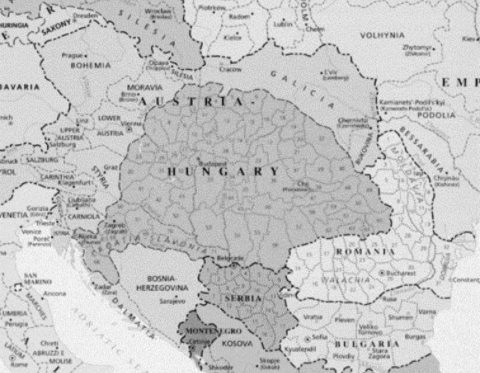
Much of Europe had for centuries been controlled by empires consisting of many different ethnicities with the boundaries between them regularly shifting over time. But during the nineteenth century there was a rise in nationalism throughout the region, specifically ethnic nationalism, and demands for different ethnic groups to be able to forge their own nation states and determine their own destinies. As these different groups tried to develop their own sense of national consciousness the notion of who they were as a nation became important. Definitions of who they were became formed, in part, by definitions of who they were not.
One ethnic group which was spread throughout the region was part of the Jewish diaspora. They were not concentrated in one area and could not claim their own region as theirs among this patchwork of developing new nations. In all of the new national identities being developed the Jewish community seemed to be consistently defined as "outsiders". The Jewish community had for long suffered from occasional pogroms but this seemed to be taken to a different level as these new nation states began to compete with each other to control their own territories.
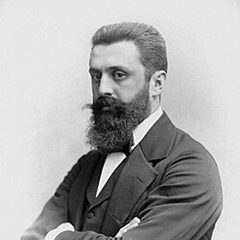
It was against this backdrop that Zionists started to develop the idea that there needed to be a homeland for Jews which they could call their own, rather than being left as a minority in states which were becoming more and more exclusive in terms of who they saw as legitimate members of their newly forming national communities. Various locations were considered for this new homeland but the area that was eventually targeted was the region that had become known as Palestine, which was a part of the Ottoman Empire.
The Great War and its continuing impact
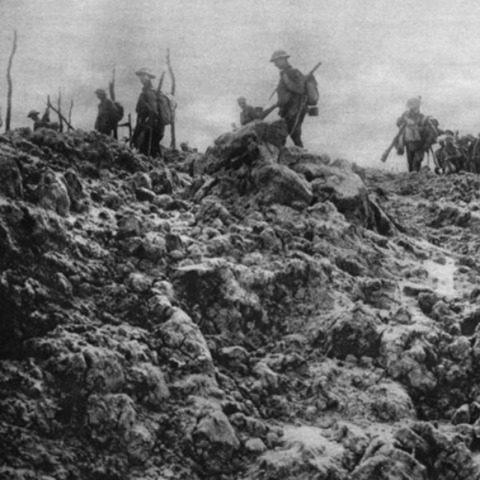
The Great War that broke out between the European powers in 1914 would bring an end the empires controlling the Middle East and central and eastern Europe. In Britain, and elsewhere in western Europe, the war ended with the Armistice agreement of 1918. But for much of eastern Europe the ravages of war would continue for many years after this. It is estimated by one German historian that more people died in these conflicts than the total number of deaths in Britain, France and the United States combined. As these conflicts continued it was the Jewish communities of this area that was a group that suffered the most.
The Ottoman Empire was divided up between Britain and France. This wasn't done to reflect the reality on the ground or the wishes of the inhabitants of these countries. Rather, it was done to serve the interests of the victorious powers that had emerged from the Great War. For Britain's part, it was also done to honour a commitment made by the British Foreign Secretary during the war in which Britain had committed to help provide a homeland for the Jewish people which would be located in Palestine.
Britain was given administrative responsibility for Palestine through a League of Nations mandate in 1920. It saw its responsibility as being to rule on behalf of the local Arab majority whilst also seeing through its promise to deliver a Jewish homeland. Britain was promising to look after the interest of the Arab majority in Palestine whilst also committing to serve the interests of a Zionist group whose main aim was to ethnically cleanse Palestine of all non Jews. The impossibility of meeting these contradictory goals became more obvious with each passing year of the mandate and with each new wave of Jewish immigration to the region.
End of the British Mandate and the creation of Israel in 1948
The impossibility of reconciling the opposing Arab and Jewish interests was only exacerbated as the horror of what Nazi Germany had been doing to the Jewish population of Europe became apparent at the end of the Second World War.
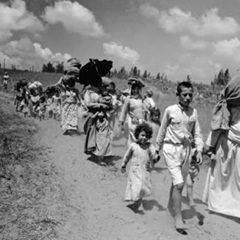
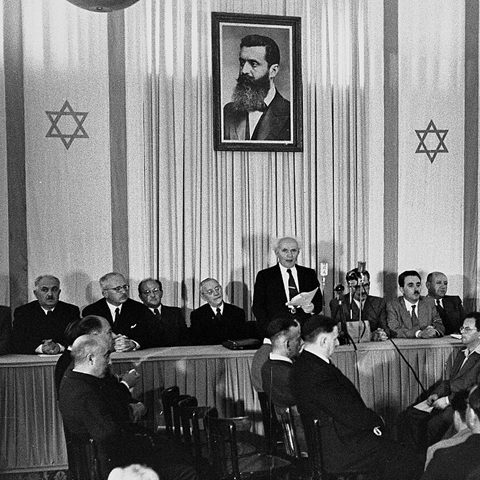
Al Naqba - the Disaster
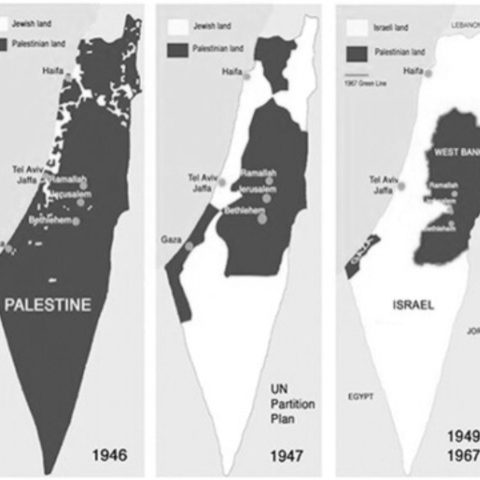
According to the Jewish Virtual Library, in 1946 there were approximately 543,000 Jews in Mandatory Palestine. This represented 30% of a total population of 1,810,037. The remaining population consisted largely of Christian and Muslim Arabs. In spite of this, and with the British Mandate coming to an end in 1948, the United Nations drew up a plan which would establish two states, a Palestinian and Jewish state, but with the Jewish state being given over half of the land. Following the adoption of the resolution recommending this plan, a civil war broke out in Palestine between the Palestinians and the Zionist forces that had amassed in the country over the previous twenty years.
At the end of the British Mandate in 1948, the British withdrew, leaving behind them a region which now descended into a broader Arab-Israeli conflict. A state of Israel was declared which was now opposed by a number of neighbouring Arab countries. By the end of this conflict, the well armed Zionist militias which had been waging war against the Palestinians and, prior to this, against the British forces that were administering the region, emerged triumphant. They grabbed far more land than had been allocated to them within the UN Partition Plan and evicted tens of thousands of Palestinians from their homes leaving them to flee as refugees to neighbouring countries and to the few areas within Palestine that the Zionists didn't control.
The only areas not controlled by the new state of Israel were a narrow strip of land around Gaza, which became controlled by Egypt, and the West Bank, which became part of Syria. Following the 6 day war of 1967, between Israel and its Arab neighbours, Israel captured both the Gaza strip and the West Bank. These were viewed by the international community as occupied territories but this has never been how they have been viewed by Zionists in Israel. The Zionist project was to remove non Jewish people from what they regarded as their land. It is an objective that they continue to pursue to this day.