
The West Bank
The West Bank is a landlocked territory located on the western bank of the Jordan River in the Levant region of West Asia. It forms the larger part of the Palestinian territories alongside the Gaza Strip.
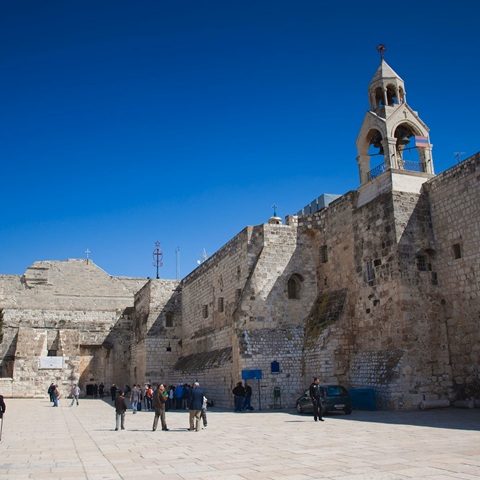
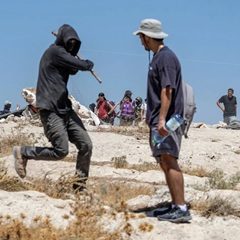
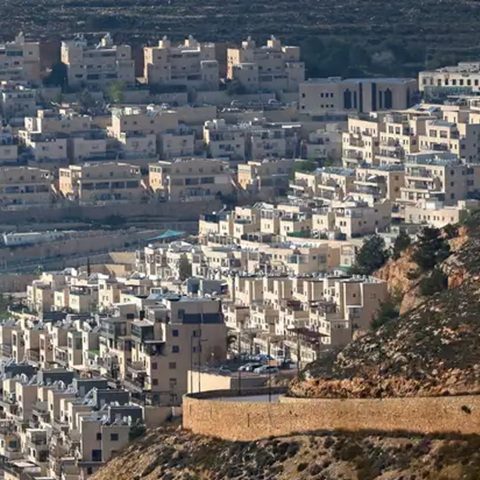
West Bank separated from the rest of Palestine
The territory of the West Bank first emerged as a region following the Arab-Israeli war which ended with an armistice agreement in 1949. Under the United Nations Partition Plan for Palestine this was a territory which was to have formed part of the Arab state of Palestine. But following the armistice the area was annexed by Jordan. Palestinians living in the West Bank, including the refugees created by the conflict, were granted full Jordanian citizenship. West Bank Palestinians held seats in the Jordanian parliament and participated in national life, though political tensions regarding distinct Palestinian representation persisted. The territory was fully integrated into Jordanian administrative, legal, and economic systems, and the country briefly changed its name from Transjordan to the Hashemite Kingdom of Jordan.
Israel occupied the West Bank, including East Jerusalem, during the Six-Day War in June 1967, ending Jordanian administrative control. Many Palestinians fled from the West Bank into Jordan. There had already been tensions in the relationship between Palestinians and Jordan and with large numbers of Palestinians now present in Jordan there was, effectively the formation of a state within a state. Jordan maintained a legal and territorial claim to the West Bank until July 31, 1988, when King Hussein formally renounced Jordanian claims in favour of the Palestine Liberation Organisation (PLO) as the sole representative of the Palestinian people.
Immediately after the war, Israel established a Military Governorate to rule over the West Bank. In late June 1967, Israel effectively absorbed East Jerusalem, expanding its municipal boundaries and applying Israeli civil law—a move that was formalised by the Knesset via the Jerusalem Law in 1980. In 1981–1982, direct military governance over the rest of the West Bank transitioned into the Israeli Civil Administration, operating under the Ministry of Defence. Jordan officially severed its administrative and legal ties to the region in 1988.
The Oslo Peace Accords
Decades of regional conflict, the First Intifada, and changing political landscapes led up to the secret negotiations that produced the Oslo Peace Accords. Public bilateral talks sponsored by the US and the Soviet Union brought Israeli, Jordanian, Lebanese, Syrian, and Palestinian delegates together for the first time, setting a precedent for direct dialogue. The election of Israeli Prime Minister Yitzhak Rabin brought a leader to power who was more willing to compromise and pursue a negotiated land-for-peace settlement. Israeli law previously barred citizens from meeting with the PLO, but this ban was lifted in early 1993 as back-channel communications progressed.
Norwegian academics and diplomats (including Terje Rød-Larsen and Mona Juul) facilitated confidential meetings in Oslo between Israeli and PLO officials, bypassing official gridlock to reach a mutual framework of recognition. Formally called the Declaration of Principles, this agreement was signed in Washington, D.C. It established mutual recognition: Israel recognised the PLO as the representative of the Palestinian people, and the PLO recognised Israel's right to exist while renouncing terrorism. It also set up a five-year transitional period of limited Palestinian self-governance.
The redeployment of Israeli security forces and elections for the Palestinian Authority as specified in the Oslo II agreement were carried out as planned. But the Oslo process confronted its first major hurdle on November 4, 1995, when Rabin was assassinated by a Jewish extremist after attending a peace rally. Israel’s 1996 election, reflecting the growing concerns of the Israeli public over national security, brought to power Benjamin Netanyahu, an outspoken critic of the Oslo Accords. There were also serious misgivings among many leading Palestinians such as Edward Said as the Palestinians seemed to have given a great deal in exchange for very little.